Stop working frantically without real results. Master the Eisenhower Matrix to prioritize daily tasks, reclaim deep focus, and accelerate career momentum.
Khmer Digital News team • Read 5 min•
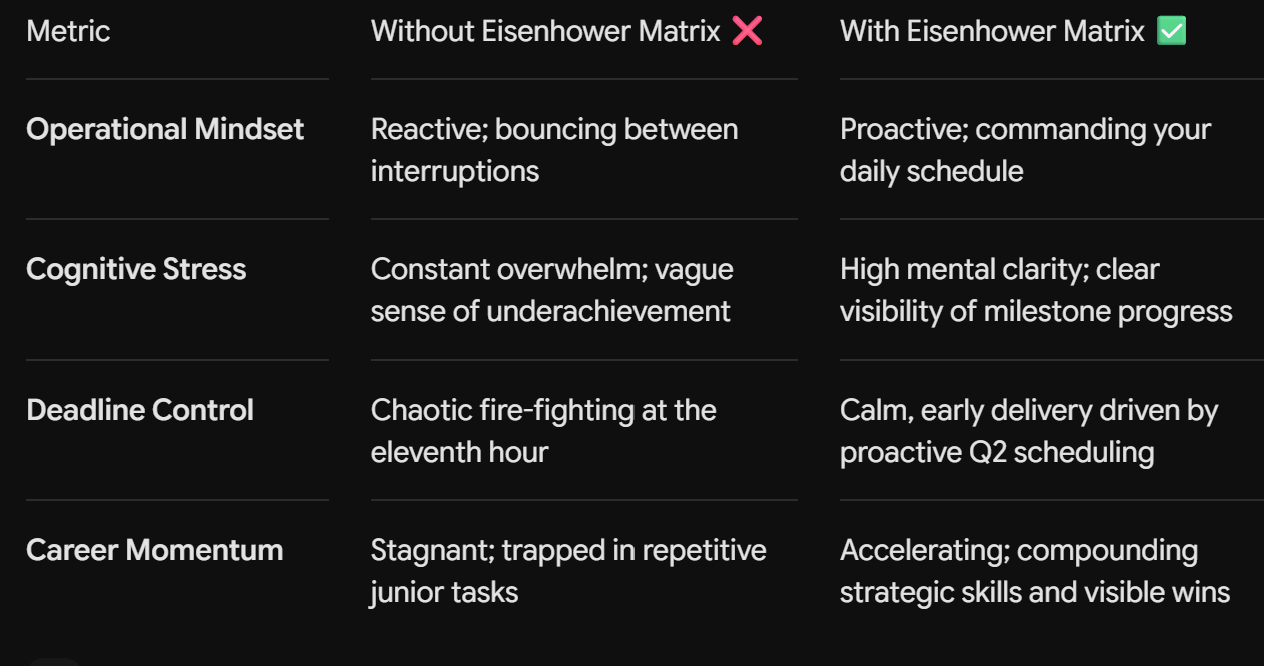
Mastering the Eisenhower Matrix: Stop Being Busy, Start Being Effective Does this sound painfully familiar? You sit at your desk at 8:00 AM, reply to dozens of urgent chat pings, jump between back-to-back syncs, and put out small operational fires all afternoon. Yet by 6:00 PM, you stare at your screen with exhaustion, realizing your highest-impact project hasn't progressed by a single inch.
For early-career professionals, tech specialists, and junior leaders, the real bottleneck is rarely a lack of stamina. The root cause is almost always "The Tyranny of the Urgent"—the inability to systematically distinguish between what is merely urgent and what is truly important.
This is precisely why Dwight D. Eisenhower, the 34th U.S. President and five-star general, developed the foundational model known globally as the Eisenhower Matrix. Here is your actionable, field-tested guide to transforming daily chaos into a focused career engine.
1. Deconstructing "Urgent" vs. "Important" At the heart of the matrix lies a timeless principle:
"What is important is seldom urgent, and what is urgent is seldom important."
Urgent Tasks: Demand immediate attention. They shout loudly—ringing phones, flashing notification badges, and last-minute requests from colleagues. Failing to react quickly creates short-term friction.
Important Tasks: Directly align with long-term goals, mission-critical metrics, and professional growth. They rarely scream for your attention, but they determine whether you climb the career ladder or stay running on a treadmill.
2. Strategic Breakdown of the Four Quadrants URGENT NOT URGENT +--------------------------+--------------------------+ IMPORTANT | Q1: DO FIRST | Q2: SCHEDULE | | (Immediate Crisis Action)| (Strategic Goldmine) | +--------------------------+--------------------------+ NOT IMPORTANT | Q3: DELEGATE | Q4: ELIMINATE | | (Automate / Hand Off) | (Strip Out Time Drains) | +--------------------------+--------------------------+ Quadrant 1 (Q1): DO FIRST — Urgent & Important (Unavoidable Crises) High-stakes deliverables with impending deadlines. Ignoring these carries immediate and severe consequences.
Real-World Scenarios: Production server outages, major client account blockers, non-negotiable quarterly board reports due this afternoon.
Execution Protocol: Attack these during your peak biological energy window in the morning. Isolate yourself from interruptions until the fire is extinguished.
Quadrant 2 (Q2): SCHEDULE — Not Urgent, but Important (The Career Accelerator) This is where top 1% performers invest up to 70% of their cognitive capacity. Because Q2 items lack tight deadlines, poor planners constantly push them away until they morph into crises.
Real-World Scenarios: Upskilling in high-demand frameworks, developing standard operating procedures (SOPs), physical conditioning, and long-range roadmap architecture.
Execution Protocol: Deploy Calendar Blocking. Reserve 60 to 90 minutes of daily non-negotiable deep work. Treat this appointment with the same gravity as an executive meeting.
Quadrant 3 (Q3): DELEGATE — Urgent, but Not Important (The Busywork Trap) These items masquerade as important because they demand immediate attention, but they primarily advance someone else’s agenda, not your core mission.
Real-World Scenarios: Agendaless check-ins, routine operational inquiries, formatting slide decks, or repetitive data collation.
Execution Protocol: Delegate to appropriate team members, convert synchronous check-ins into asynchronous memos, or automate using AI and no-code tools.
Quadrant 4 (Q4): ELIMINATE — Neither Urgent nor Important (Cognitive Waste) Pure friction that consumes attention without providing genuine cognitive rest or productive output.
Real-World Scenarios: Compulsive Slack/email checking every 10 minutes, mindless algorithmic feed scrolling, or perfectionist font-tweaking to avoid daunting tasks.
Execution Protocol: Ruthlessly purge these habits during working hours. Configure strict app limits, disable non-essential alerts, and substitute mindless scrolling with deliberate, restorative breaks.
3. Professional Script: Gracefully Deflecting Q3 Interruptions Protecting your high-leverage focus requires diplomatic boundaries. Use this battle-tested template when ad-hoc requests threaten your priority blocks:
📝 Script for Managers or Cross-Functional Peers:
"Hi [Name], thanks for flagging this. Right now, I'm deep into [High-Priority Q1/Q2 Project], which is on a strict deadline for delivery by [Time/Day]. To make sure your deliverable isn't delayed, can this wait until [Specific Time], or would you prefer I align with [Colleague Name] so they can assist you right away?"
💡 Pro-Tips Box for Junior Professionals The "Rule of 3": Every morning, identify only three high-impact tasks (drawn from Q1 and Q2) that will make the day an undeniable win.
Delegation is not abdication: When delegating Q3 tasks, provide crystal-clear context, specifications, and deadlines.
Weekly Audit Routine: Spend 15 minutes every Friday reviewing your time logs. If Q2 received less than 30% of your energy, recalibrate your calendar for the coming week.
Conclusion Professional excellence is not defined by how many tasks you check off a disorganized list; it is defined by the strategic weight of what you complete. By applying the Eisenhower Matrix, you stop burning out on low-leverage busyness and start creating undeniable career impact. Audit your task list today, draw your four quadrants, and take intentional control of your work.
Microsoft has officially introduced its third-generation custom AI chip, Azure Maia 300, designed to enhance inference performance and reduce infrastructure costs and reliance on Nvidia.
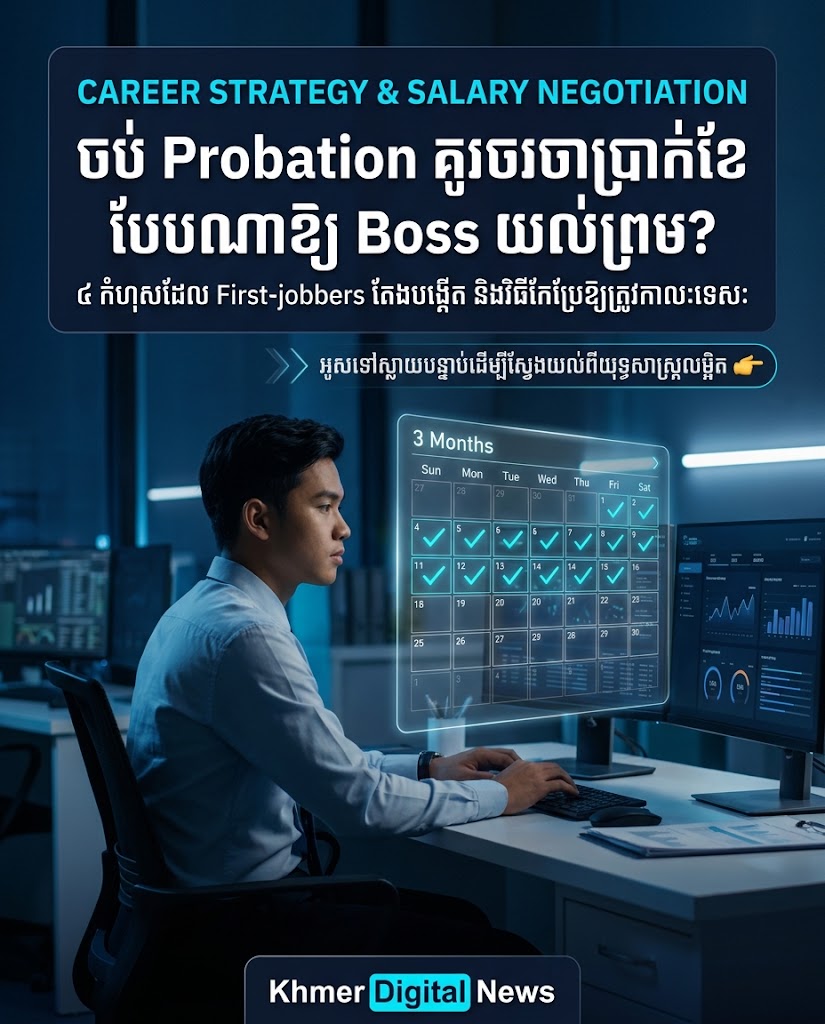
Learn salary negotiation techniques after completing your probation period, tailored to the context, performance, and professional communication with your manager.