
The Triangular Strategy (Part 6): Pillar 2 — Economic Strangulation: Choking Off Gem and Timber Revenues
Historical analysis of Pillar 2 of Cambodia's Triangular Strategy: Economic strangulation by shutting down illicit gem mining and timber trade that funded the Khmer Rouge, by H.E. Ieng Pisey.
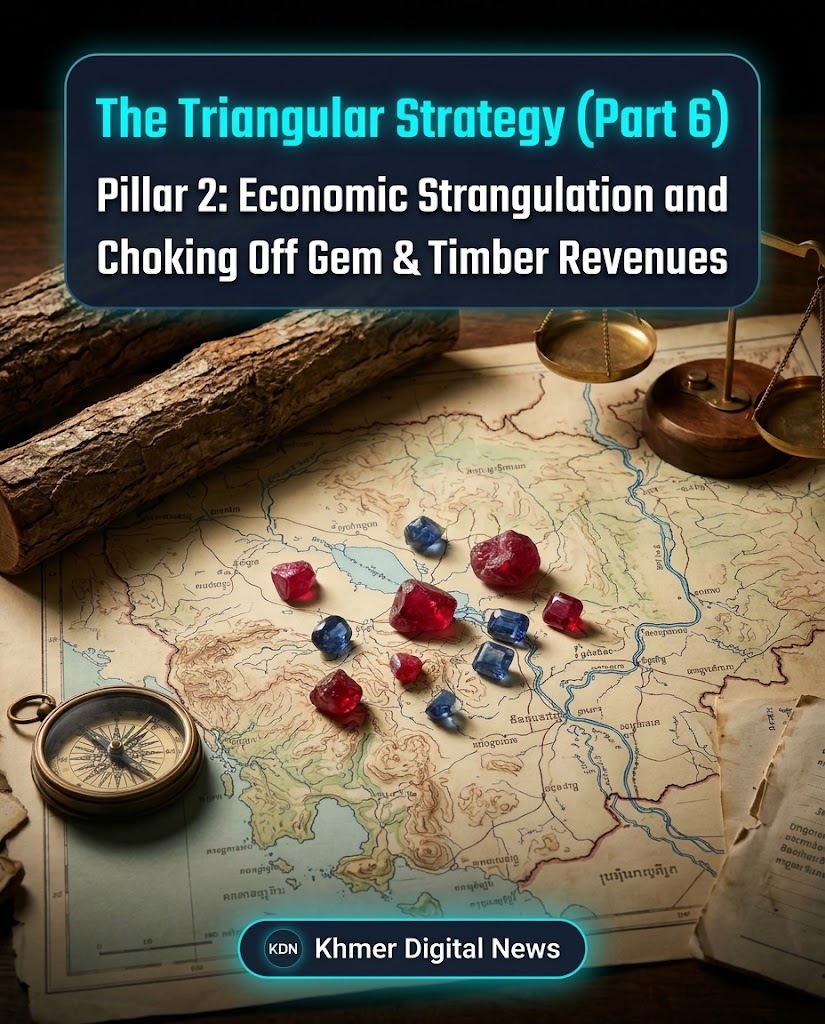
The Triangular Strategy (Part 6): Pillar 2 — Economic Strangulation: Choking Off Gem and Timber Revenues
- The Khmer Rouge insurgency generated tens of millions of dollars annually through Pailin ruby mining and cross-border timber concessions.
- The April 1995 national timber export ban and coordinated border closures neutralized insurgent financial lifelines.
- Severe resource depletion precipitated widespread internal demoralization, catalyzing the massive 1996 Pailin defection.
In "The Triangular Strategy: The Backbone of Cambodian Peace," H.E. Ieng Pisey highlights that no military faction can endure without sustained financing.
1. Border Closures and the National Timber Ban
Enforcing the 1995 timber export moratorium and sealing bilateral border transit choked off illicit cross-border revenue streams.
2. Logistical Starvation and Internal Fragmentation
Deprived of liquidity, guerrilla units suffered severe shortages of anti-malarial medication, food supplies, and ammunition replacements.
3. Catalyst for the Historic 1996 Pailin Defection
Economic bankruptcy broke the resolve of field commanders, setting the stage for the pivotal 1996 Pailin reconciliation breakthrough.
Q: How was the Khmer Rouge movement financed in the early 1990s?
A: Primarily through illicit gemstone mining in Pailin and commercial logging contracts along border zones.
Q: Why was economic strangulation more decisive than frontline combat?
A: Disintegrating logistical supply chains compelled combatants to abandon ideological warfare for peaceful societal reintegration.