Cancer Breakthrough: USC Scientists Discover Method to Produce Renewable Supply of Immune Cells
Biomedical researchers at USC have discovered a method to generate a renewable supply of genetically engineered immune cells capable of attacking cancer.
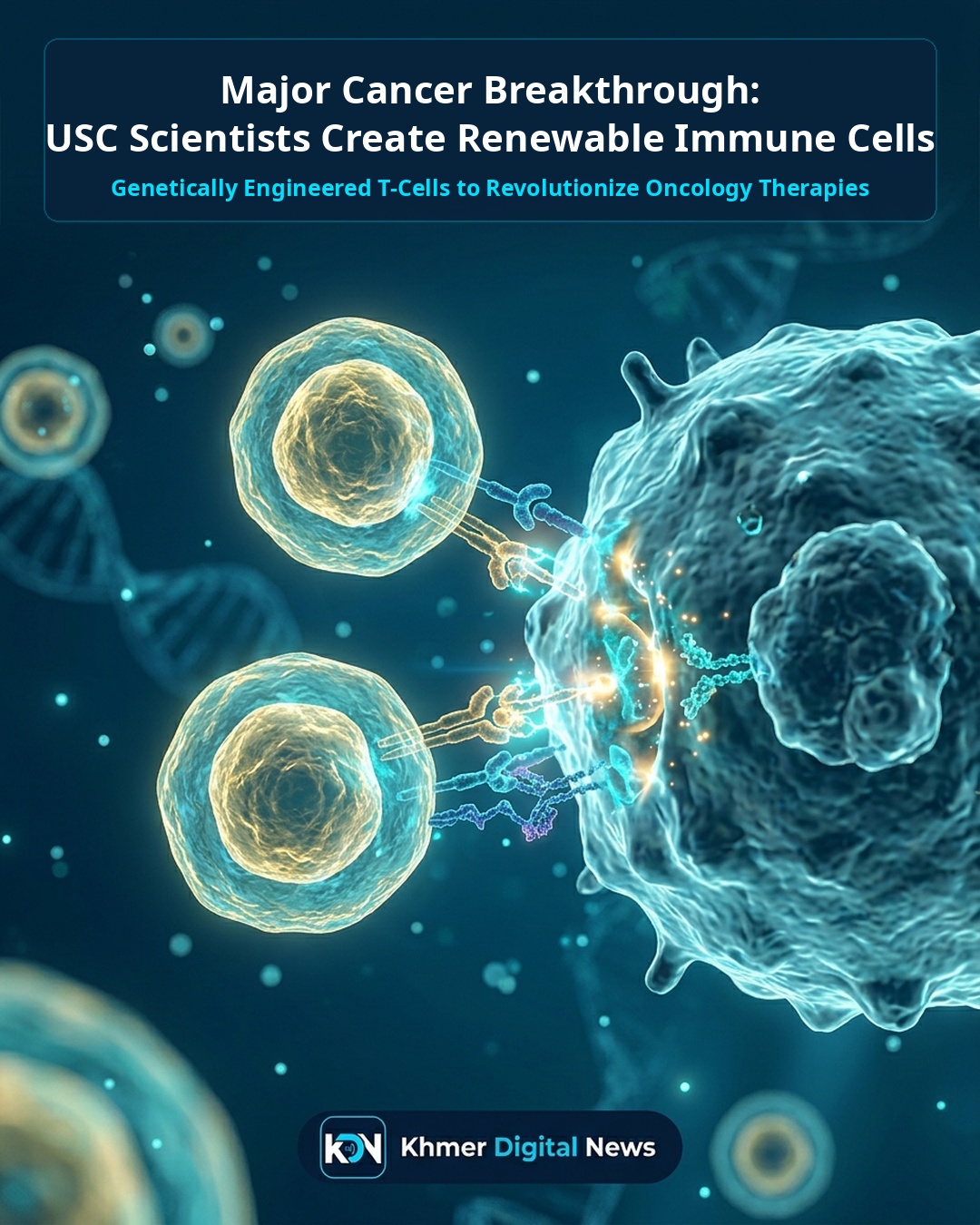
By Khmer Digital News Editorial Team | Published: October 17, 2026
Key Takeaways:
- Renewable Cell Supply: Biomedical scientists at the University of Southern California (USC) developed a method to produce a scalable, renewable supply of genetically engineered T-cells for cancer immunotherapy.
- Overcoming Patient Constraints: The platform bypasses the need to harvest fragile, exhausted immune cells from late-stage cancer patients, enabling standardized therapeutic manufacturing.
- Off-the-Shelf Availability: This innovation paves the way toward affordable, readily accessible cellular therapies that can be administered immediately without multi-week delays.
The global fight against oncological diseases has taken an unprecedented technological leap forward. Biomedical researchers at the University of Southern California (USC) have unveiled a breakthrough approach to produce a continuous, renewable supply of genetically modified immune cells programmed to eliminate cancer cells with pinpoint accuracy.
Published in premier scientific literature, the landmark discovery addresses one of the most persistent bottlenecks in modern cellular immunotherapy: the prohibitive manufacturing costs, production delays, and variable cell quality associated with personalized CAR-T cell treatments.
1. Bottlenecks in Conventional Autologous CAR-T Therapies
Current cellular immunotherapies predominantly rely on autologous procedures, wherein a patient's own T-cells are extracted, cryopreserved, and shipped to specialized bio-manufacturing facilities for genetic reprogramming. This complex process often takes three to four weeks and incurs costs exceeding hundreds of thousands of dollars per patient.
Crucially, patients battling advanced malignancies frequently have heavily depleted immune systems resulting from aggressive rounds of chemotherapy. In many instances, their harvested T-cells fail to expand or exhibit poor functional potency once reintroduced into the bloodstream.
2. The USC Innovation: Scalable Stem-Cell Derived Allogeneic Immunity
To eliminate these constraints, the USC research team engineered a biological platform capable of directing pluripotent stem cells into fully mature, functionally robust T-cells and Natural Killer (NK) cells. Through precise CRISPR-based gene editing, these cells are equipped with synthetic receptors that target tumor-associated antigens while resisting immune exhaustion.
In rigorous pre-clinical evaluations, these bioengineered cells demonstrated remarkable persistence and cytotoxic potency against both hematologic malignancies and dense solid tumors, which have historically resisted conventional immunotherapy.
3. Transitioning Toward True 'Off-the-Shelf' Oncology Therapeutics
The ability to culture standardized, renewable immune cell lines transforms cancer cellular therapy from a bespoke artisan procedure into an "off-the-shelf" biopharmaceutical product. Clinical centers will eventually be able to maintain ready supplies of cryopreserved therapeutic cells, enabling patients to initiate treatment within hours of diagnosis.
As the USC research consortium prepares for Phase 1 clinical trials, this scalable paradigm promises to significantly lower treatment expenses, broaden global patient access, and accelerate recovery outcomes across diverse cancer types.
Frequently Asked Questions (FAQ):
Q: What makes this USC discovery different from current CAR-T cell therapy?
A: Traditional CAR-T therapy uses the patient's own fragile cells, requiring weeks of personalized laboratory preparation. USC's method generates an abundant, standardized supply of immune cells from a renewable source, making therapies readily available off-the-shelf.
Q: How long will it take before this therapy becomes widely accessible to patients?
A: Following laboratory validation, the therapy must undergo phased clinical trials in human patients to rigorously establish safety and efficacy, a process typically spanning two to four years before regulatory authorization.
Official Sources: Research report from the University of Southern California (USC) via ScienceDaily (October 16, 2026).