IMF 2026 Annual Meetings: Global Economy Is Running Out of Buffers Amid High Debt
The 2026 IMF and World Bank Annual Meetings issued an urgent warning that the global economy is running out of fiscal buffers amid rising debt and trade fragmentation.
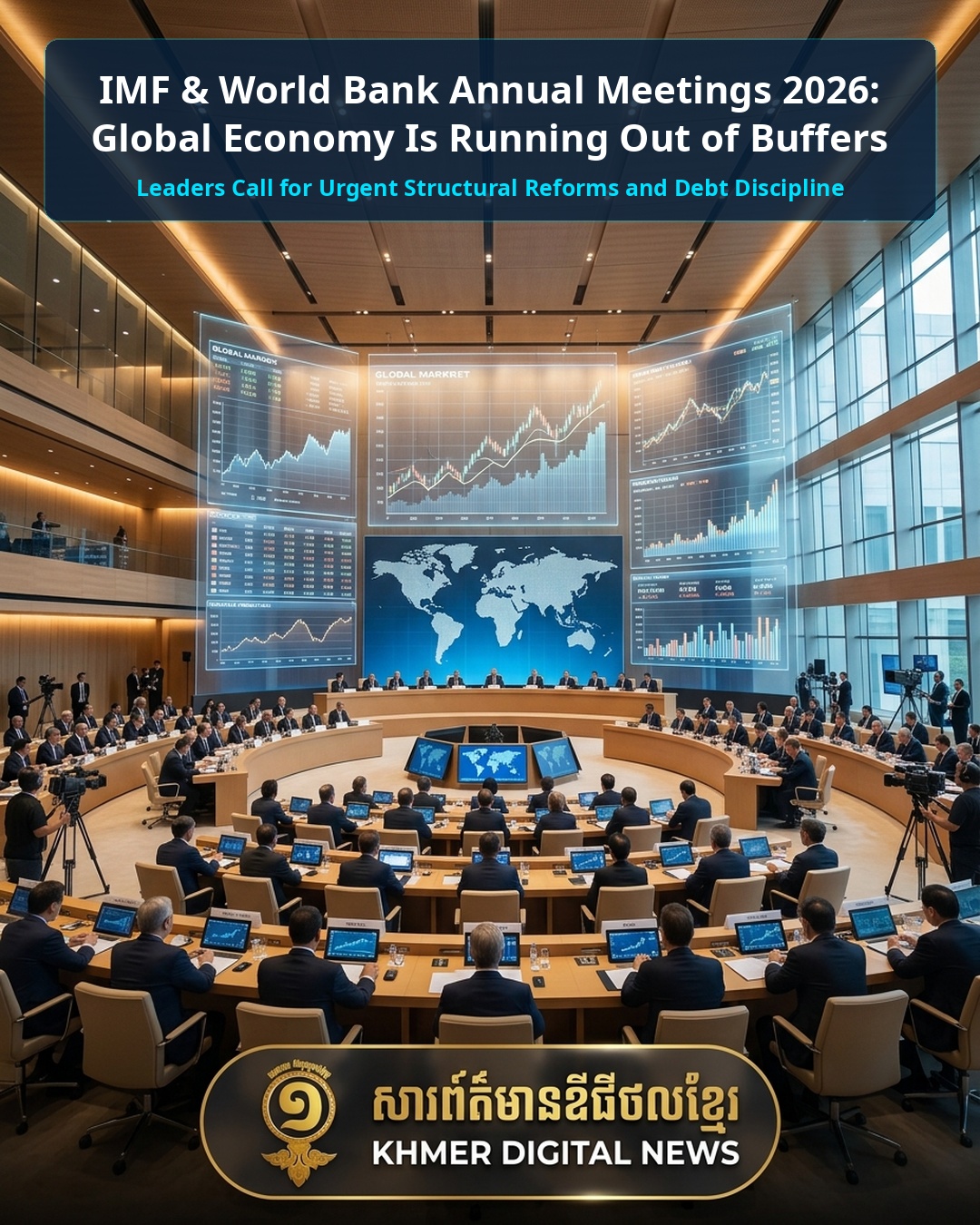
By Khmer Digital News Editorial Team | Published: October 17, 2026
Key Takeaways:
- Depleting Fiscal Space: The International Monetary Fund warned that governments worldwide have nearly exhausted their financial reserves and fiscal tools to cushion against future economic shocks.
- Elevated Public Debt Levels: Global debt burdens have reached critical highs due to persistent high interest rates and multi-year inflation mitigation expenditures.
- Structural Reform Mandate: Multilateral leaders urged nations to streamline public spending, tackle trade barriers, and prioritize high-return digital and green investments.
The global economy has arrived at a critical juncture where fiscal safeguards have been significantly eroded. Speaking at the 2026 Annual Meetings of the International Monetary Fund and the World Bank Group, international finance ministers and central bank governors warned that the world has dangerously little room left to maneuver against new shocks.
Following years of persistent inflation, elevated interest rates, and geopolitical shifts, many governments have depleted the emergency reserves built during previous decades. With fiscal space at historic lows, international monetary officials stressed that immediate fiscal consolidation and coordinated policy action are imperative to safeguard financial stability.
1. Soaring Sovereign Debt and Debt-Servicing Pressures
According to the latest analytical briefings presented during the meetings, total public debt across advanced and developing economies remains significantly above pre-pandemic projections. Sustained higher-for-longer borrowing costs have substantially raised debt-servicing obligations, forcing governments to allocate larger shares of national budgets solely to interest payments.
For emerging markets and low-income economies, this debt burden is actively crowding out essential public investments in infrastructure, education, and healthcare. Financial analysts noted that without decisive debt restructuring frameworks and prudent fiscal management, debt distress risks could escalate rapidly.
2. Trade Realignment and Geoeconomic Fragmentation
Beyond fiscal constraints, trade fragmentation continues to exert structural drag on worldwide productivity. Rising tariff barriers, export restrictions, and the reorganization of supply chains into regionalized trade blocs have elevated production costs and dampened international trade flows.
World Bank officials underscored that multilateral cooperation remains essential to maintaining open, predictable trading systems. Fragmented regulatory environments not only diminish economic efficiency but also disproportionately harm vulnerable economies that rely heavily on open global markets for growth.
3. The Policy Roadmap: Rebuilding Resilience and Driving Productivity
To rebuild fiscal buffers, the IMF outlined a clear multi-year policy roadmap centered on credible medium-term budget frameworks. Governments were urged to eliminate inefficient subsidies, broaden tax bases equitably, and protect targeted safety nets for vulnerable populations.
At the same time, monetary authorities must maintain vigilance against inflation while calibrating interest rate policies to avoid choking off economic vitality. Sustained long-term growth will ultimately depend on accelerating digital transformation, modernizing labor markets, and investing in resilient infrastructure.
Frequently Asked Questions (FAQ):
Q: What does "running out of fiscal buffers" mean in economic terms?
A: Fiscal buffers represent a government's available financial reserves and borrowing capacity. Running out of buffers means a country has limited financial leeway to stimulate the economy or support citizens during an unexpected downturn.
Q: How do higher global interest rates affect developing countries?
A: Because much of international sovereign debt is denominated in foreign currencies like the US dollar, higher interest rates make borrowing and debt servicing considerably more expensive, straining national budgets.
Official Sources: Official briefings and policy communiqués from the 2026 IMF Annual Meetings and the World Bank Group.